


At Nintendo Museum, visitors can
experience Hanafuda for themselves
in the Try Playing Hanafuda! workshop.
This workshop uses image recognition and projection technology alongside
an explanation of the rules
so that even first-time players can experience a game of Hanafuda.


Hanafuda is a card game played with cards depicting flowering plants associated with the seasons.
The history of Hanafuda is long, originating in Tenshō Karuta from the Azuchi-Momoyama period.
The Hanafuda we play today is said to have been created in the middle of the Edo period.
There are four cards for each month, from January to December, for a total of 48 cards.
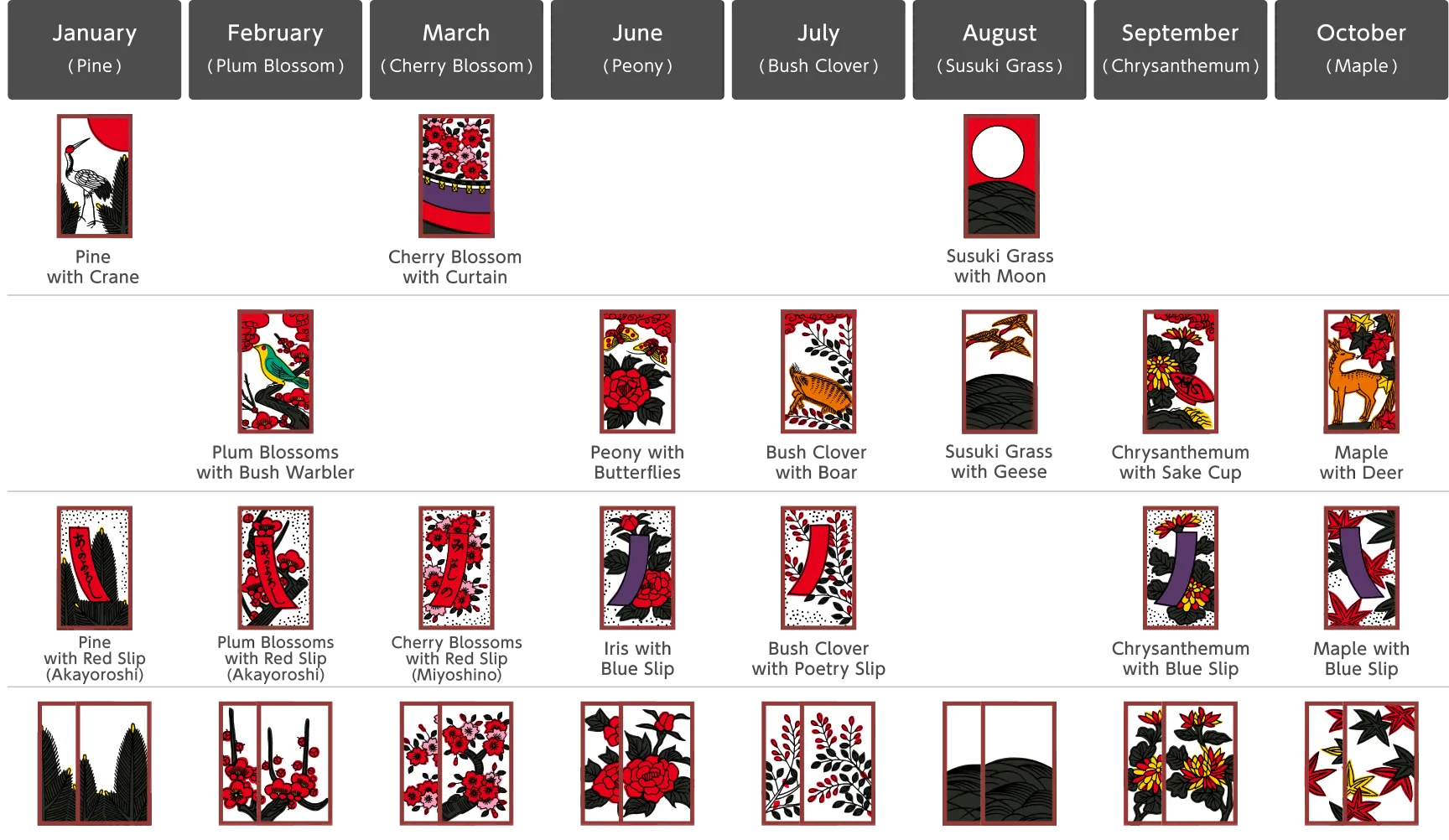
Each card, as well as each card set created by forming special combinations, has a point value.
The basic way to play Hanafuda is to alternate turns taking cards, competing for points by making sets out of those cards.
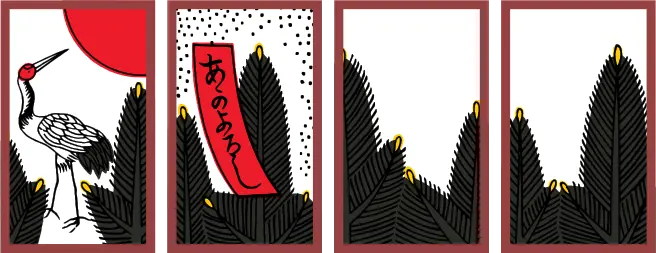
January (Pine)
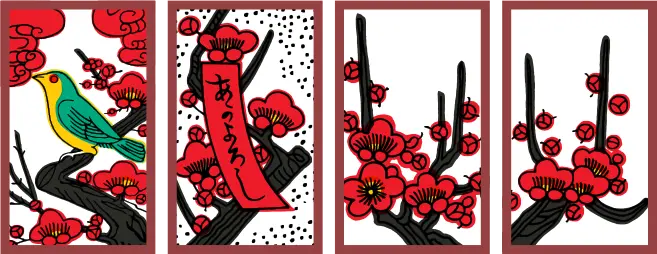
February (Plum Blossom)
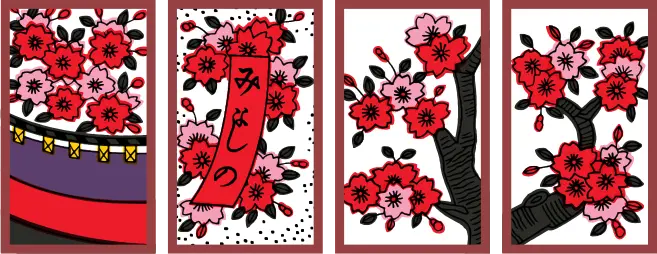
March (Cherry Blossom)
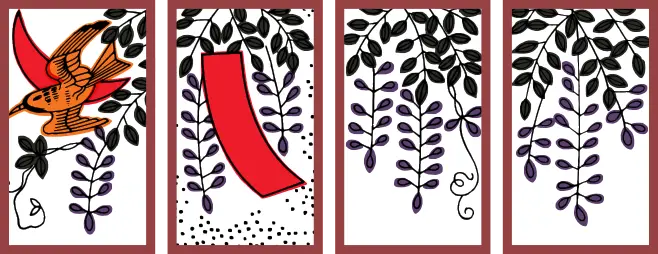
April (Wisteria)
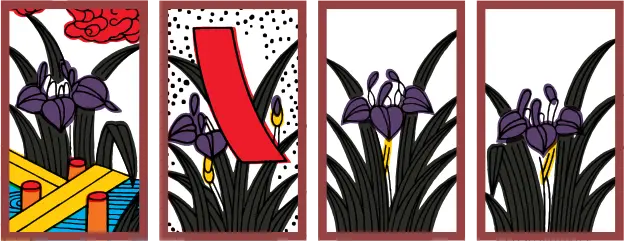
May (Iris)
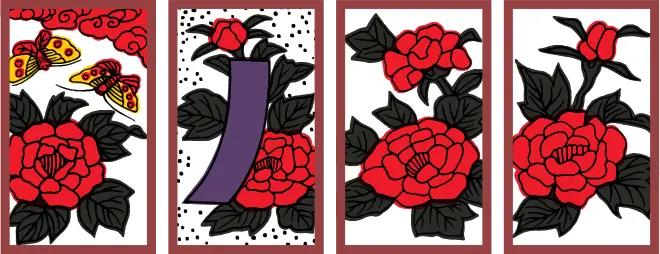
June (Peony)
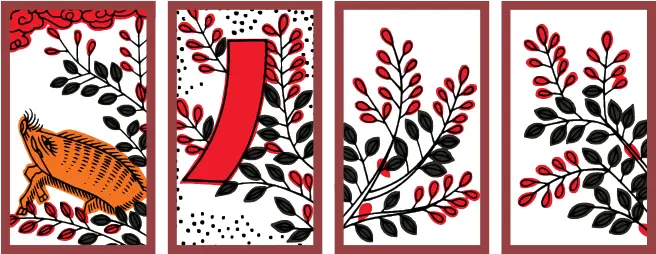
July (Bush Clover)
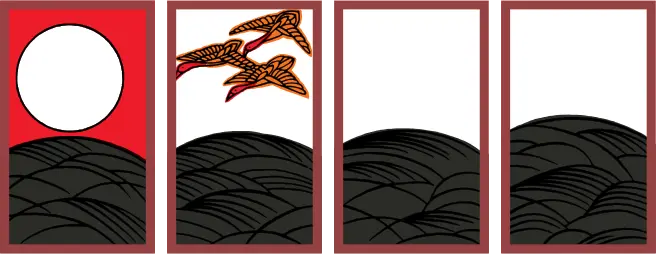
August (Susuki Grass)
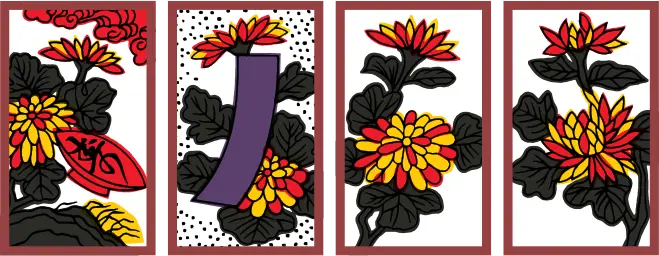
September (Chrysanthemum)
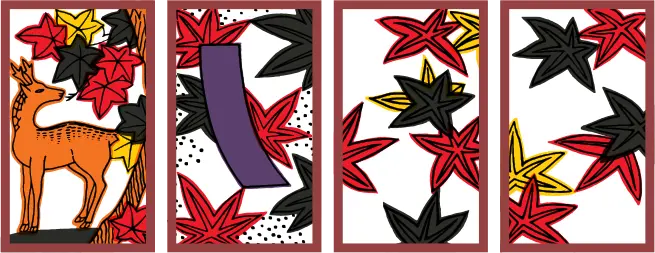
October (Maple)
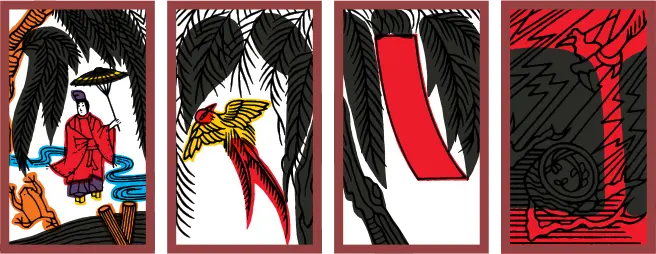
November (Willow)
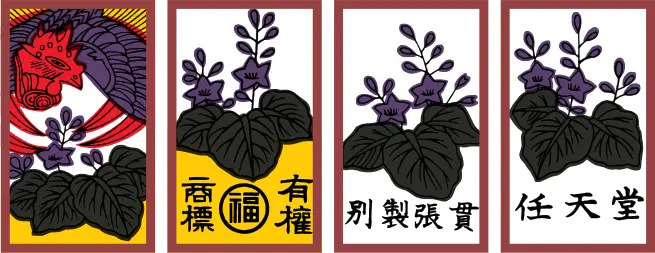
December (Paulownia)
*The workshop uses 32 cards.


There are different ways to play Hanafuda, such as Koi-Koi, Hana-Awase, and Hachi-Hachi.
In the Try Playing Hanafuda! workshop, you can experience a simplified version of Hana-Awase called Try Hana-Awase.
Some of the rules from the original Hana-Awase version are omitted, and the number of cards is reduced from the typical 48 to 32. This helps beginners pick it up more easily.
If you've never played Hanafuda, this is a good starting point.
But if you've already participated in the workshop, why not play Try Hana-Awase at home?
No. of players
2*This workshop is for a two-player game, but Hanafuda can be played with up to four players.
Rules
Each player starts with six cards in their hand and eight cards in the center, all face up.
- The remaining cards are placed face down, as the deck.
-
The number of cards dealt depends on the number of players. If playing with three people, each player is dealt four cards.
If playing with four people, each player is dealt three cards.
Preparing to Play at Home
Remove cards
Remove the April (Wisteria), May (Iris), November (Willow), and December (Paulownia) cards. In Try Hana-Awase, you'll play with the remaining 32 cards.
Deal cards
From the 32 face-down cards, six are dealt to each player, if playing with two people.
If playing with three people, four cards are dealt to each player.
If playing with four people, three cards are dealt to each player.
The cards are dealt to each player face up.
This is each player's hand.
Place cards
in the center
After drawing cards for each player's hand, eight cards are placed face up in the center.
These eight cards become the first center cards.
The remaining cards are stacked and placed face down on the table, as the deck.
*If all four cards from the same month appear in the center, collect all the cards, shuffle, and redeal from the beginning.

 Place one card
from your hand
into the center
The players decide who will play first. Whoever plays first is known as the Oya.
The Oya then checks if there's a center card that matches the month of a card they have in hand.
If there is a matching card in the center...
The two cards are moved over to that player's scoring area.

If there are no matching cards in the center...
Take one card from your hand and add it to the center.

 Place one card
from the deck
into the center
If the card taken from the deck matches the month of a card in the center, the matching cards are moved to your scoring area, same as if you'd played the card from your hand.
If there are no matching cards, the card taken from the deck is added to the center.
All of these steps so far count as one turn.
 Repeat turns
Next, the rest of the players take their turns and then repeat their turns in order.
The game ends when players no longer have any cards in their hands.
*The game ends when there are no more cards in hand, even if there are still cards in the center.
Card Point Values

Set Point Values



You can find other ways to play, such as the original Hana-Awase,
which the rules used in the Try Playing Hanafuda! workshop are based on.
There's also Koi-Koi, which is the standard version, and Hachi-Hachi,
which is more for advanced players.

Please read before you enter the ticket drawing
- A free Nintendo Account is required to make a reservation.
- Tickets are sold via a randomly selected drawing.
- Drawing results will be sent out via email, or you can check the Home page of the ticketing website.
- If you are selected, you will be asked to complete your purchase. Only credit cards can be used to pay for tickets.
- Please make a reservation in the name of the person visiting the museum. We will check your identification on the day of your visit.
- Visits to the workshop require same-day reservations. A separate fee is required to participate.
Finally, scores are calculated and a winner is determined.
Each player checks their scoring area and calculates their score.
If multiple sets can be formed simultaneously, those values are added together.
The winner is the player with the highest score, taken from the point values of cards and sets.
If you continue to play, the role of Oya switches to another player.